Mag Drills on Steel, Stainless & Aluminum: Mounting First
Decide whether a magnetic drill can be secured to steel, stainless steel or aluminum before choosing the cutter and operating setup.
MagDrill field guide
Plan magnetic drilling work with accurate capacity distinctions, mounting requirements and manufacturer-backed guidance.
Start with the mag drill buying guide, then use these focused articles to check the details that matter for your next job.
Decide whether a magnetic drill can be secured to steel, stainless steel or aluminum before choosing the cutter and operating setup.
Compare exact-model minimum steel requirements, full-base contact and thin-plate stop rules before selecting a magnetic drill.
Evolution publishes a 3/8-inch minimum plate thickness for these two exact US models. That shared number does not approve coated, curved, uneven, non-ferrous or otherwise unsuitable work; check the full manual and surface conditions.
As an Amazon Associate I earn from qualifying purchases. Links marked “Check Amazon” are affiliate links.
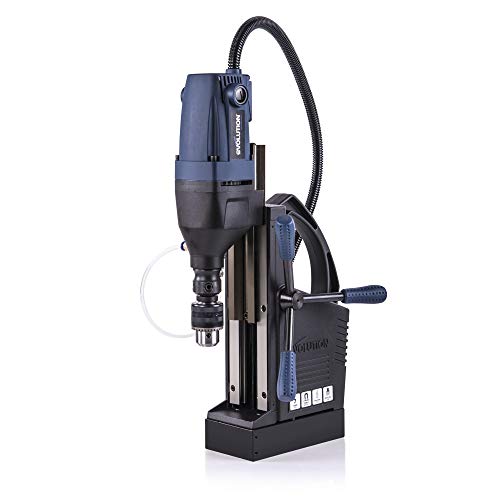 Model guide available
a compact-capacity corded drill for hole schedules that stay within its 1-1/8-inch annular diameter limit
The 2-inch depth figure is separate from diameter, and a 2-inch cutter is not automatically a 2-inch-diameter cutter. Evolution specifies a 3/8-inch minimum plate thickness. The published magnetic adhesion figure is not a lifting capacity or a reason to ignore that minimum.
Check Amazon Model guide available
a larger-capacity alternative to the S28MAG when a single-speed corded machine suits the work
The US product page lists one speed, not two. Do not import a speed range from a different Evolution machine. Its chuck accessory information also distinguishes the chuck from the HTA47 adapter; confirm what the exact package contains before buying a twist-drill accessory.
Check Amazon